Ilene Gibson's Legacy
by Cris Belvin
In March of 1967, The Beatles released their classic song “With a Little Help from My Friends”. One year prior, Ilene Quade completed her Drury University journey and began another, neither of which would ahave happened without a little help from one of her friends.
A native of Mount Vernon, the future Dr. Ilene K. Gipson ’66 H’99 grew up with an affinity for science. She was a good enough student that she earned a scholarship to attend the University of Missouri. But one of her high school teachers was a Drury graduate and he eventually steered her away from Mizzou and toward his alma mater.
“He told me I was going to get lost if I went to Columbia,” Gipson said. “So, he set me up at Drury.”

photo courtesy Drury Archives
But there was one problem: Gipson’s scholarship to Missouri covered all of her expenses. She didn’t have that same scholarship at Drury. Once again, the teacher stepped up.
“He told me to work throughout the school year and work through the summer,” Gipson said. “And when it came time to pay the bill at Drury, he’d pay for whatever was left. And he did that for three years.”
The gesture of an invested teacher eventually paid enormous dividends, not only for Gipson, but also for the scientific world as Gipson went on to become one of the foremost authorities on cell biology.
Truth be told, Gipson originally wanted to be a pre-med major, but “I couldn’t keep my grades up,” she said. So, she turned to biology.
That in turn led her to the graduate program at the University of Arkansas at Fayetteville, where she first found an affinity for both teaching and research.
During her PhD research, Gipson learned about a new methodology called electron microscopy, a technique which utilizes electrons to create images. She mastered the skillset and that, combined with her PhD research, opened doors for her. One of those doors led her to the University of Oregon Health Sciences Center in Portland.
“It was an extraordinarily fortunate situation in that I was recruited by the husband-and-wife team of Dr. Robert P. Burns and Dr. Lynette Feeney,” Gipson said. “He was an ophthalmologist and she was a cell biologist with the same kind of skill set that I had just acquired.”
Gipson, Burns, and Feeney worked together in Portland for five years, until all three took different paths. Burns and Feeney left for the University of Missouri when he was hired as chair of the Department of Ophthalmology. At the same time, Gipson was being recruited to Harvard due in no small part to the influence of Burns and Feeney.
“I went on to Boston because I had done some work in the cornea with them and had independently developed a project on wound healing,” Gipson said. “They helped me and fostered me and helped me get noticed by the cornea group at Harvard.”
Gipson’s arrival at Harvard in 1979 coincided with the beginnings of the eye research field. She received an appointment at the Schepens Eye Research Institute, and continued to teach in the Department of Ophthalmology. She spent the next 40 years helping Harvard establish the corneal field as a separate component of ophthalmology.
As time went by and Gipson’s profile in cell biology and ophthalmology began to grow, her alma mater took notice. Drury eventually offered Gipson a seat on the Board of Trustees.
“I told Drury I would be interested, but not until I made professor,” Gipson said. “Well, as soon I made professor they came back to Boston and asked
me to join the board, and I did.”

photo courtesy Drury Archives
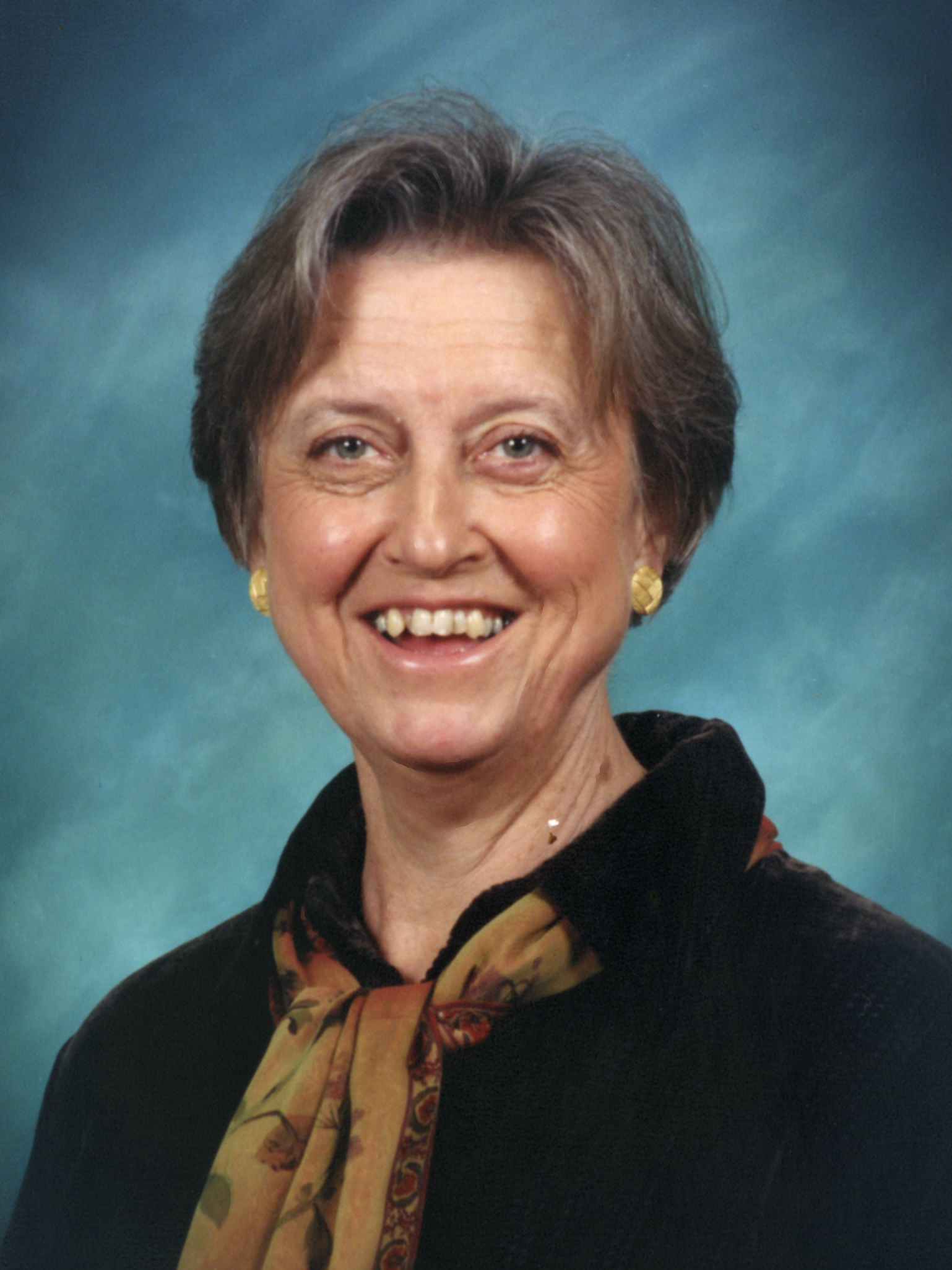
photo courtesy Drury Archives
“I don’t find myself to be a very good board-type member, from a business standpoint,” Gipson said. “I was chair of the Academic Affairs Committee and we worked hard to develop a new more contemporary description of faculty requirements. I enjoyed much of it.”
Now an Emeritus Trustee at Drury, Gipson still keeps tabs on her alma mater.
“It’s a little beacon in that part of the world,” she said. “I’m a strong believer in a small liberal arts education. It’s an important component for some people. Some people’s thoughts really need that.”
The Drury Springfield Promise has especially grabbed her attention.
“I think it’s fabulous,” Gipson said of the new program which is designed to make Drury more affordable for bright students in the Springfield area. “Focusing on the local population is a great idea.”
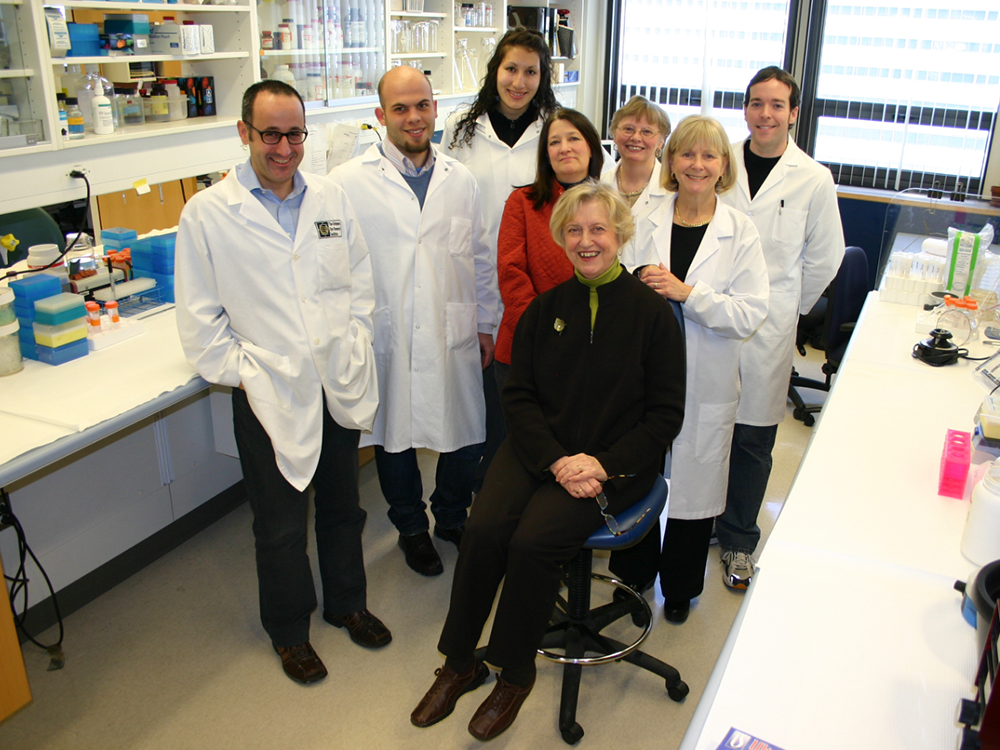
photo courtesy Ilene Gipson
It’s not surprising Gipson feels that way, especially considering her outreach to Drury students during her time at Harvard. For years, Gipson brought a handful of Drury students to Boston to study and work in her lab over the summer. Two of them – current St. Louis Director of Public Health Dr. Matifadza Hlatshwayo Davis ’05, and Springfield ophthalmologist Dr. Jacob Thomas ’03 are counted among her biggest success stories.
Several things are immediately evident when speaking with Gipson. First and foremost, she is a committed scientist and her ability to explain the complexities of her work shines through. As does her love for her alma mater and those who helped her along the way.
Gipson has worked with Drury’s Advancement staff to establish a future scholarship for students from the Mount Vernon area. The scholarship will honor her former high school math teacher and Drury alum, Henle Holmes ‘32, the man who provided her a helping hand so many years ago.
With a little help from one friend, Gipson found her path. Now, through her scholarship, she’s offering that same hand to the next generation – friends she may never meet, but whose futures she’s already helping to shape.
Read More
DRURY MAGAZINE SPRING 2025
PUBLISHER
Drury University
Dr. Jeff Frederick, President
MANAGING EDITOR
Janet Rock
DIGITAL EDITOR
Max Prater
WRITER / EDITOR
Rex Ybañez
DESIGNER
Janet Rock
PANTHER TRACKS EDITOR
Charles Taylor
CONTRIBUTING WRITER
Cris Belvin
Drury Magazine, a publication for alumni and friends of Drury University, is published twice each year. The mission of Drury Magazine is to engage readers in the life of the university, reflect the university’s values and capture the intellectual curiosity and distinct community that is Drury.
The views presented do not necessarily reflect or represent those of the editors or the official policies of Drury University.
Share your thoughts with us: editor@drury.edu
Drury Fusion™ is a registered trademark of Drury University.