A LIFE BUILT FOR OTHERS
The Legacy of Carl Stillwell
From the sidewalks of Drury to the decks of Navy ships, Carl’s lessons in discipline, service, and quiet leadership shaped his sons.
by Rex Ybañez
A Room That Tells a Family Story
When visitors settle into the hearth-warmed chairs in Bay Hall, they often pause without quite knowing why. The space feels welcoming in a way that’s difficult to name. Soft light filters through tall windows. Conversations linger. People instinctively relax.
It is fitting. Stillness, thoughtfulness, and welcome defined the man for whom the room is named.
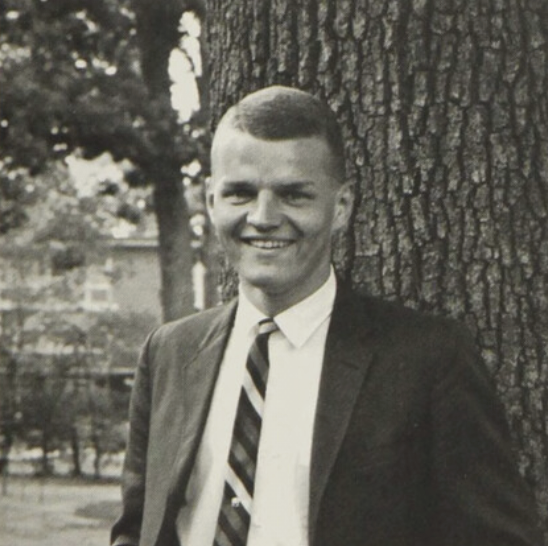
On November 4, the room was officially named in honor of Carl Stillwell, whose 26 years at Drury University helped shape the campus and its community. For his sons, Paul ’66, and Mark ’67, the dedication carried deeply personal meaning.
“Our father started working here the year I was born,” Mark said. “We’d been on Drury’s campus since we were old enough to walk. We knew every faculty member, every staff member.”
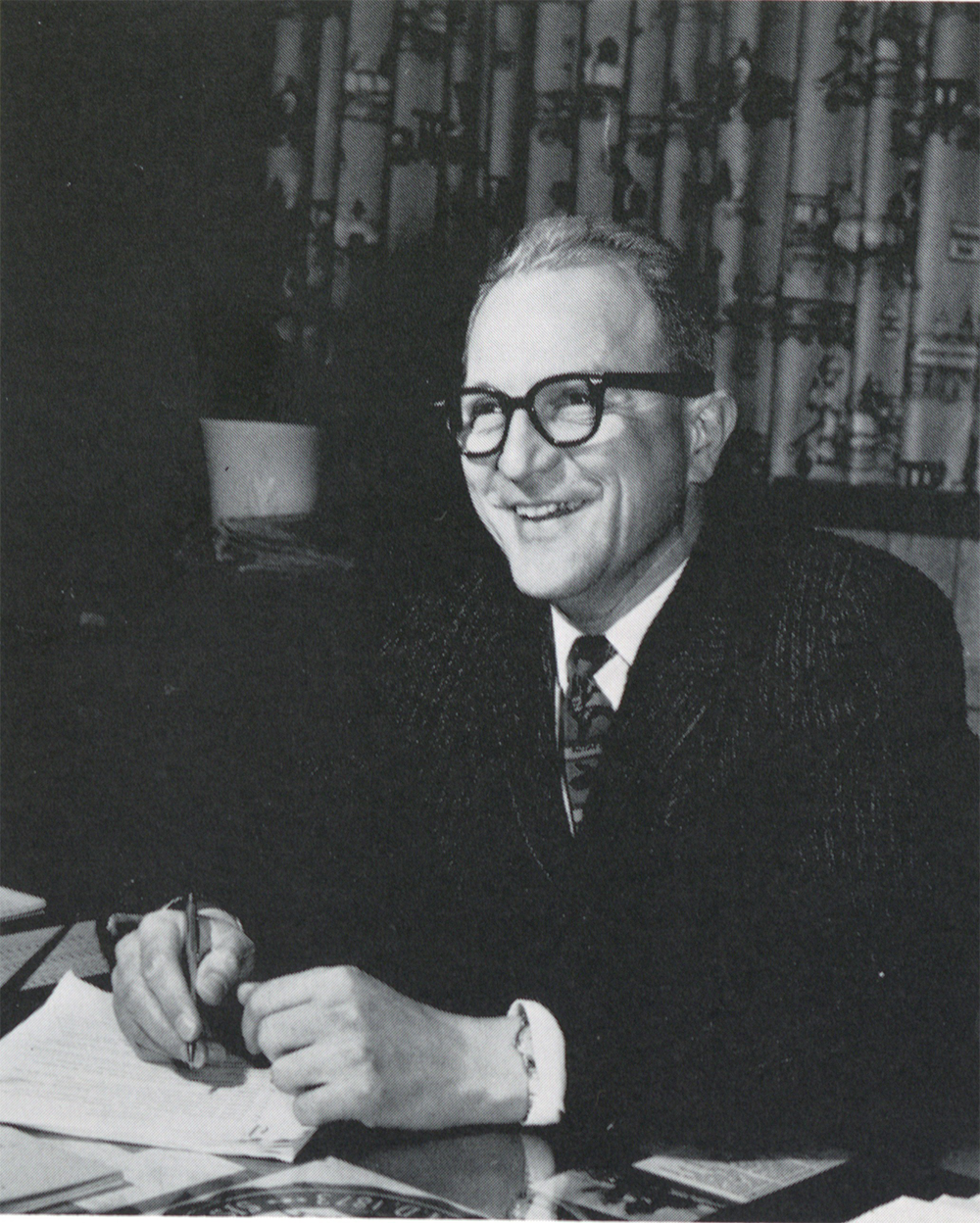
For nearly three decades, Carl Stillwell served Drury University with quiet discipline and deep conviction. He oversaw campus growth through the post-war years, guided returning veterans into academic life, helped shape Springfield through civic leadership, and pastored two small rural congregations — all while raising two sons who would follow his example of service and integrity.
Carl’s service to Drury was remarkable. As business manager, vice president, and eventually acting president, he oversaw the construction of a dozen buildings, including Weiser Gym. Beyond campus, he served Springfield as mayor and as a city council member.
“Everything he did was for other people,” Paul said. “His side job was as a preacher, yet he never told us how to live. He led by example.”
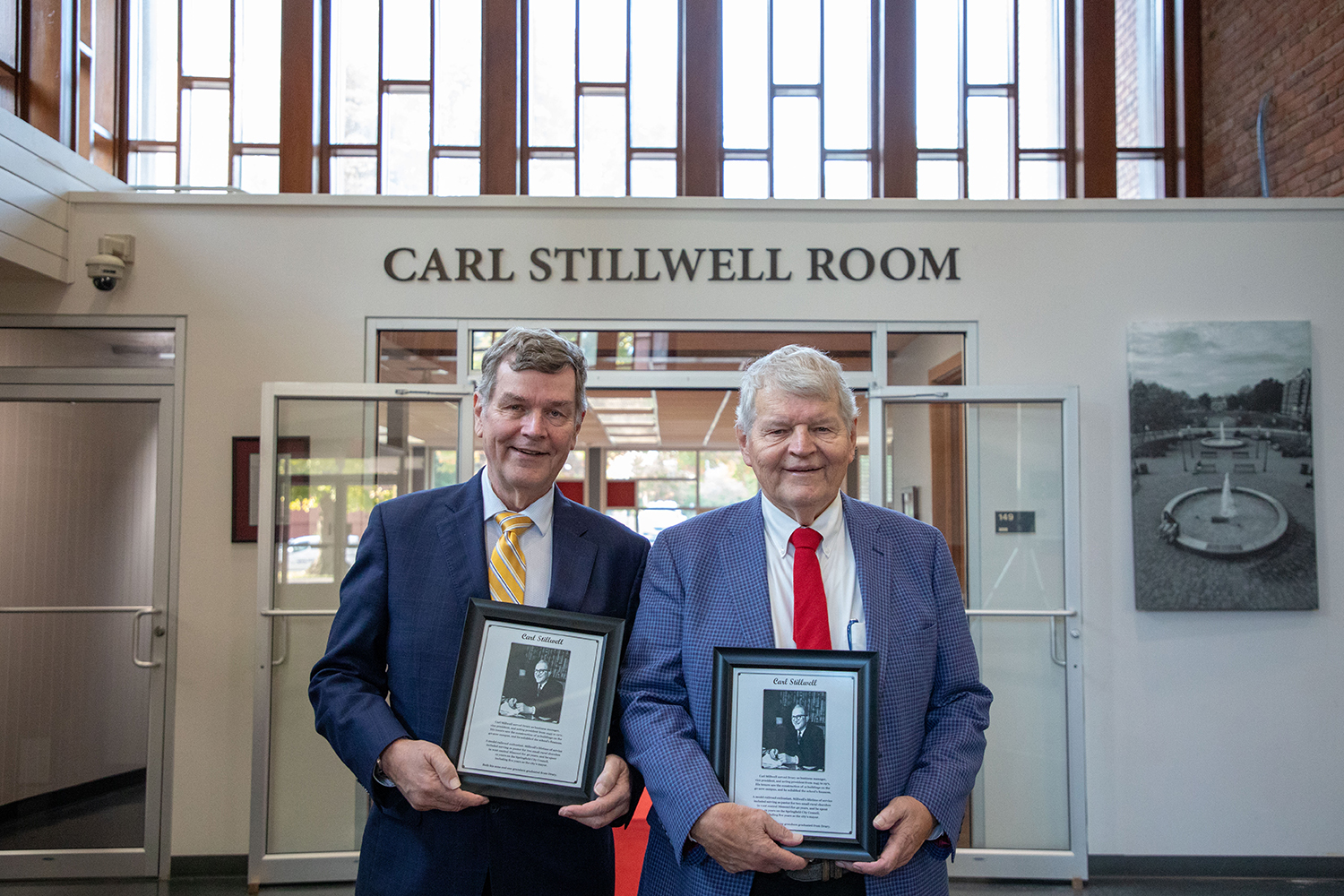
photo by Cameron Lowe
Campus Through Childhood & College Years
1945 – 1967
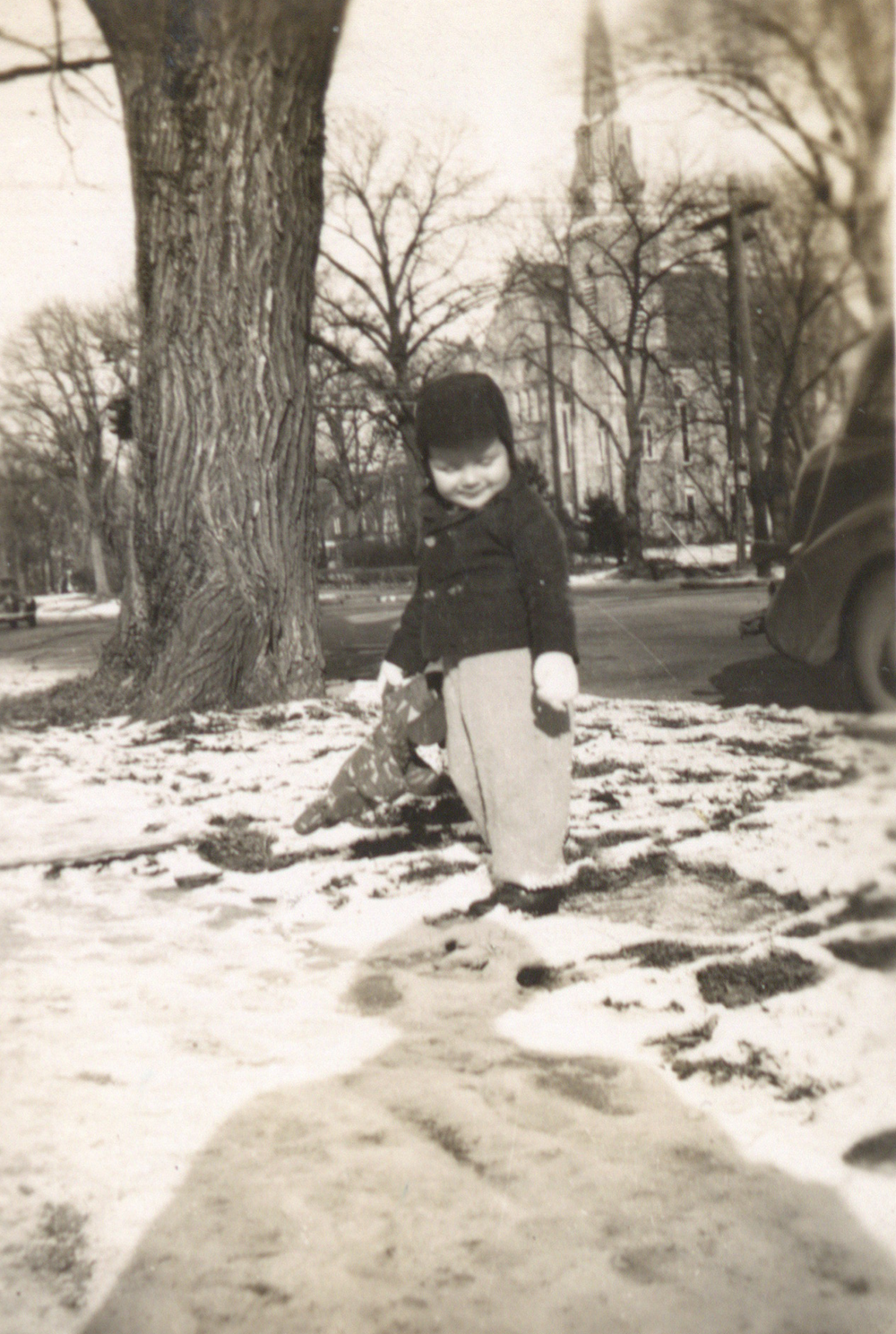
The Stillwell brothers grew up within walking distance of Drury. Their route to Central High School wound past Stone Chapel and the old library, through the campus their father helped shape.
“Our campus was our playground,” Mark recalled. “We watched the foundations being poured, climbed around construction sites. Drury Lane at sunset was part of our daily life.”
Carl’s presence was constant. He sold tickets at basketball games, rang the chapel bell after victories, and guided campus development quietly but deliberately.
“He lived without being bossy,” Paul said. “We never had to take a lot of direction. We just did what he did, and it worked well.”
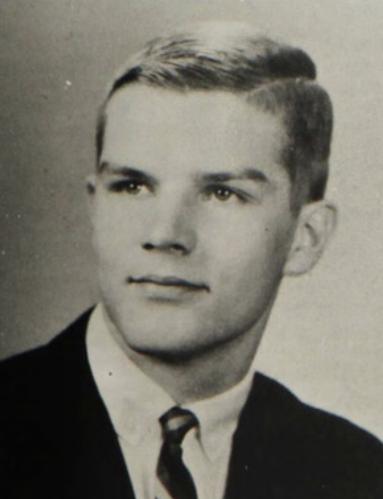
Stepping onto campus as students, Paul and Mark were already familiar with every corner. Mark majored in English, attending classes in Burnham Hall, Pearsons Hall, and Harwood Hall, which stood where Olin Library now stands.
“The key parts of my time were in Weiser Gym and Stone Chapel,” he said. “Chapel then was compulsory. I never understood how everyone fit. The building only held about 500 people, but the student body was around a thousand.”
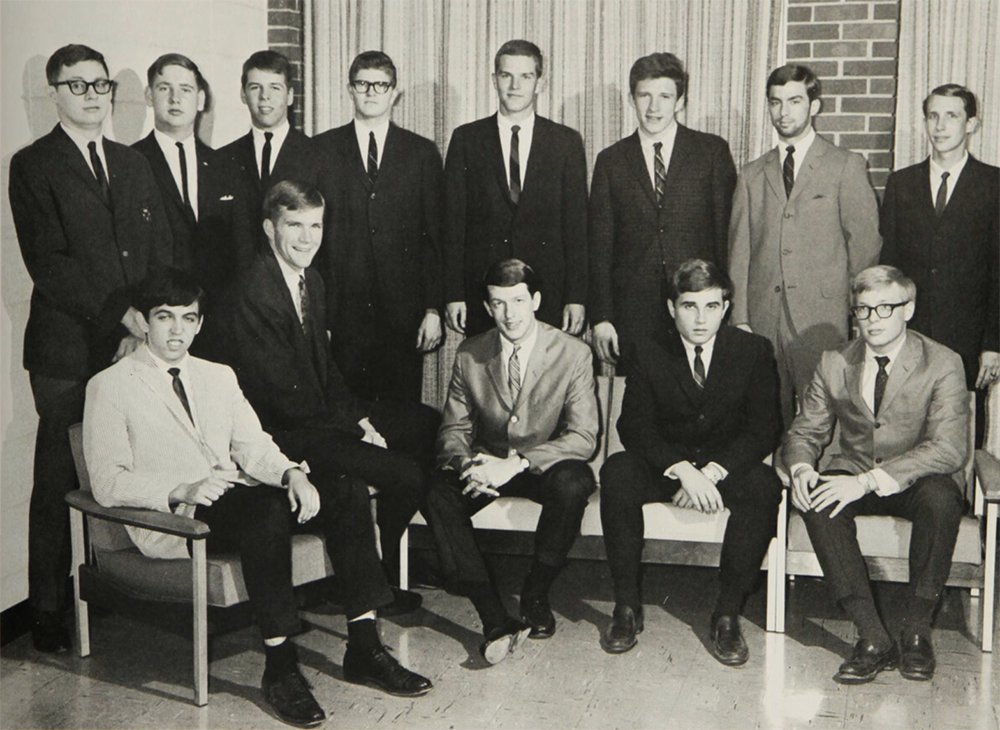
Paul, a year older, graduated in history and, like his brother, joined the Seven Sages, an academic honor group. Their father’s influence extended even to their military preparation. Both were members of the Naval Reserve, attending Thursday night drills at the Reserve Center just north of the gym — another facility their father had helped bring to campus.
The Navy Years
1967 – 1970
Carl’s lessons echoed in their military careers. Both entered the Navy’s Reserve Officer Candidate program, traveling to Newport, Rhode Island, each summer for rigorous training. “It was the best officer program, to my mind, the Navy ever had,” Mark reflected.
Their paths diverged across the Pacific. Paul served aboard the USS Washoe County and later the USS New Jersey, while Mark served aboard the USS Princeton and finished his active duty with the Military Sealift Command in Inchon, South Korea. Throughout, Carl remained a steady guiding presence.
“Every time we sent Dad a letter from overseas, he wrote back,” Paul said.
Careers of Communication & Connection
1970 – Present
After returning to Springfield in 1970, Mark followed a path close to home.
“Dad was then acting president at Drury. I joined the university as Assistant Business Manager, Sports Information Director, and Publications Editor, managing athletics communications,” he said.
Mark also handled radio play-by-play for Drury basketball before accepting a position at Southwest Missouri State University in 1972. Over 37 years, he built a distinguished career in athletics communications, earning more than 60 national awards for publications and writing.
Paul pursued a civilian career at the United States Naval Institute in Annapolis, Maryland, chronicling naval life and leadership. His books and oral histories preserve the voices of sailors and officers across generations, and for nearly 40 years, his editing and storytelling skills allowed him to capture the essence of service and duty.
Both brothers continued service in the Navy and Reserves — Mark retired as a Captain, Paul as a Commander. Their careers, like their father’s life, intertwined service, leadership, and devotion to others.
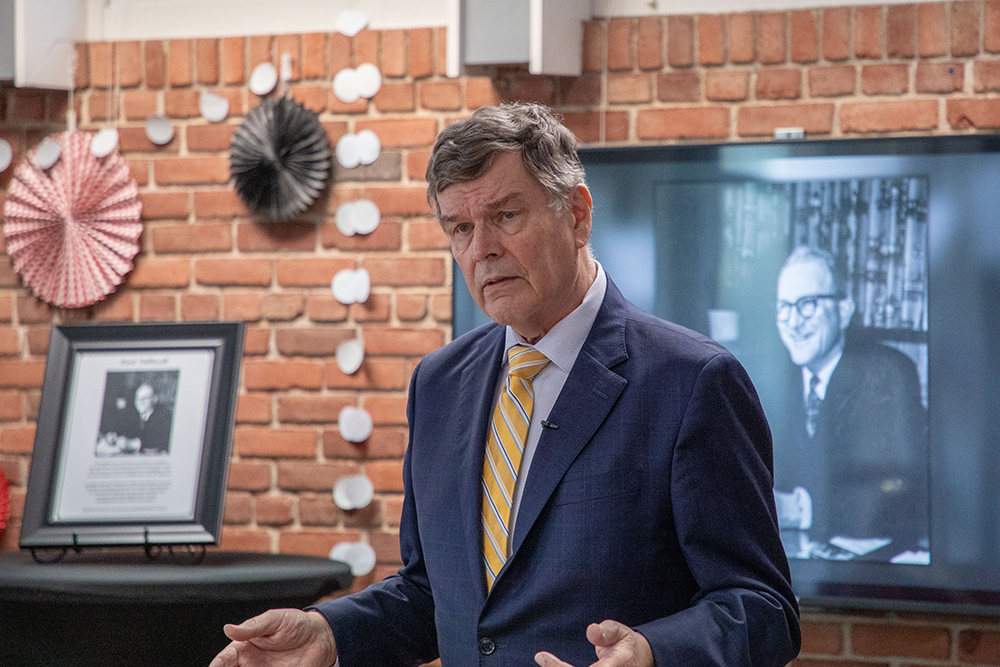
photo by Cameron Lowe
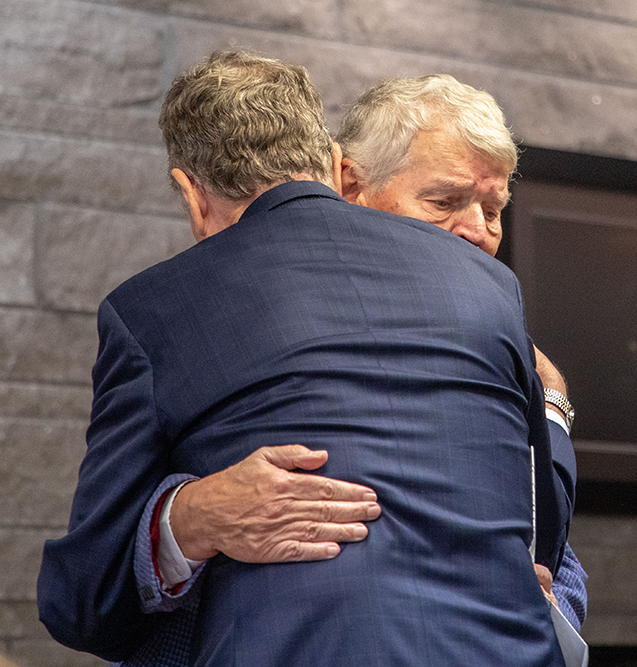
photo by Cameron Lowe
Carl’s Life as Inspiration
Through all of it, Carl remained the measure by which the brothers understood leadership and purpose. He worked tirelessly on campus, oversaw civic responsibilities, and pastored two rural churches, traveling over 100 miles in a day to serve his communities.
“He inspired us,” Paul said. “We just did his work and saw how good it was.”
Mark added, “He lived a life that was very unselfish. He gave his time, his energy, and his attention to everyone around him. We were blessed to have him as a father.
Carl’s lessons in discipline, service, and quiet leadership shaped both sons. Ringing the chapel bell, helping students cover tuition, and guiding city decisions — his life was a blueprint.
Paul summarized their father’s guiding principles: “Everything we do, from our Navy service to our work back home, is tied to what he taught us. We learned that loyalty, discipline, and service matter more than recognition. He never demanded attention, but everything he touched mattered.”
Legacy & Light
The Carl Stillwell Room stands as both tribute and touchstone: a space for gathering, reflection, and welcome. For visitors, it’s a quiet pause at the start of a campus tour. For the Stillwells, it’s a visible reflection of a lifetime intertwined with Drury and the legacy of a father who impacted both campus and Springfield.
Mark reflected, “Our campus was a little smaller then than it is now, but since we lived close, it was easy to come over here and be a part of things. Those are fond memories. I can’t come over here now without being reminded of something pleasant.”
From Drury’s sidewalks to Navy ships, from Springfield to Annapolis, the Stillwell brothers’ lives remain, in every sense, within walking distance of their father’s legacy.
Click here to read more about the Stillwell Room dedication.
Read More
Exceptional Outcomes


DRURY MAGAZINE FALL 2025
PUBLISHER
Drury University
Dr. Jeff Frederick, President
EXECUTIVE EDITOR
Levi Costello
WRITER / EDITOR
Rex Ybañez
DESIGNER
Janet Rock
CONTRIBUTING WRITER
Cris Belvin
DIGITAL DESIGNER
Max Prater ’17
PANTHER TRACKS EDITOR
Kayla Warner ’21 MComm ’23
Drury Magazine, a publication for alumni and friends of Drury University, is published twice each year. The mission of Drury Magazine is to engage readers in the life of the university, reflect the university’s values and capture the intellectual curiosity and distinct community that is Drury.
The views presented do not necessarily reflect or represent those of the editors or the official policies of Drury University.
Share your thoughts with us: editor@drury.edu
Drury Fusion™ is a registered trademark of Drury University.